Edenlab is bringing Kodjin’s approach to openEHR FHIR integration to EHRCON26, taking place at the Meervaart Theatre in Amsterdam on September 22-23, 2026. Organized by openEHR, the conference brings together the international community around clinical data modeling, interoperability, the European Health Data Space, research, and AI.

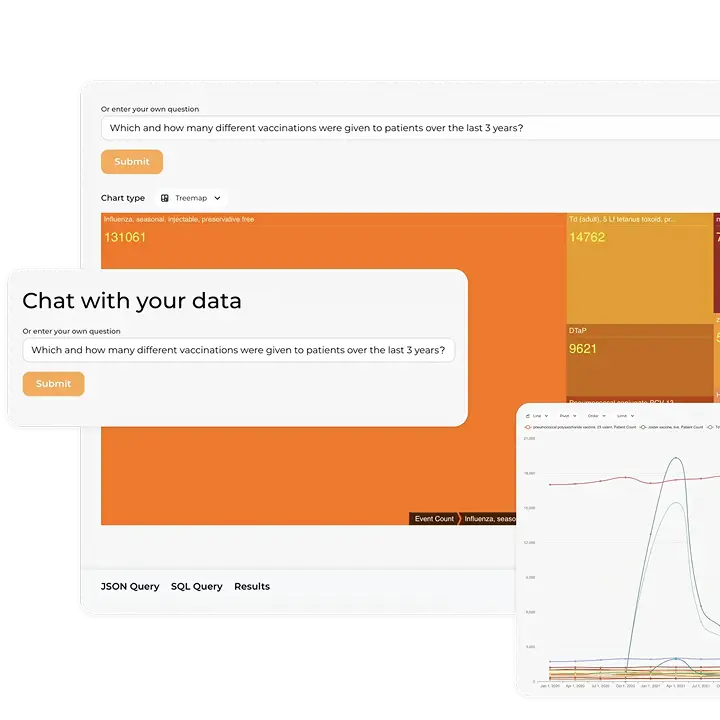
On Wednesday, September 23, Jan Vekemans, Sales Director at Edenlab, will present “Beyond the EHR: Turning openEHR Data into Clinical Intelligence with Conversational AI” as part of the Agentic AI track.
| Date | Wednesday, September 23, 2026 |
| Time | 14:45-15:00 CEST |
| Track | Agentic AI |
| Room | Room 1 |
| Registration | https://openehr.org/ehrcon26/ |
A FHIR-native layer around openEHR
A clinically rich openEHR repository may still need to exchange data with FHIR-based applications, partner systems, research environments, and national infrastructure. Building a custom interface for every connection makes that surrounding architecture harder to govern and maintain.
Kodjin Data Platform adds reusable FHIR data services around the existing openEHR environment. It supports bidirectional openEHR-FHIR mapping, validation, terminology management, security, API access, and FHIR storage. This lets openEHR retain its role as the clinical system of record while applications and partners work through a consistent FHIR interface.
A dedicated FHIR repository can also hold resources from external systems when those resources do not belong in the core openEHR repository. Clear data ownership and links between representations preserve traceability across the architecture.
From connected data to governed conversational analytics
Data exchange alone does not make information ready for analytics. Cross-source questions still depend on normalized terminology, longitudinal relationships, reliable time logic, and shared metric definitions.
Kodjin Analytics combines mapped openEHR data with FHIR, claims, laboratory, and other connected sources in a longitudinal analytical model. Teams can use the resulting foundation for cohort analytics, patient-pathway analysis, clinical and operational analysis, research, and natural-language exploration. Role-based access is evaluated before each query, and the conversational layer works with metadata and governed definitions rather than raw PHI.
Jan’s EHRCON26 session will show how these interoperability and analytics components fit together around an existing openEHR environment, creating a practical route from clinically rich records to secure, auditable intelligence.
Join the session at EHRCON26
Attend the presentation in Amsterdam and meet Jan to discuss how Kodjin can support openEHR-FHIR integration, connected data architecture, and conversational healthcare analytics.
View the full program: https://openehr.org/ehrcon26/programme/